
Whether we agree with decarbonization or not, nearly 85% of the developed world already has or has announced Net Zero initiatives. Heavy industry, transportation and agriculture are the sectors facing the most intense regulatory pressure to reduce carbon emissions.
Governments worldwide have established strict, legally binding deadlines to phase out fossil fuels across all modes of transport. The trucking industry is driven by strict fleet emission standards and upcoming internal combustion engine (ICE) bans, forcing a massive industrial shift toward medium and heavy-duty electric vehicles.
Unbeknownst to most people, there are two electric vehicle technologies: battery electric and fuel cell electric. Battery electric stores electric energy in a series of connected batteries and is used to drive electric motors. Most people are familiar with this technology. The lesser-known electric vehicle technology is fuel cell electric. These vehicles use a fuel cell, which operates on hydrogen gas to generate electricity. The electricity is still stored in a battery bank, but because the electricity is being generated as the vehicle runs, the batteries are smaller and tied directly to the electric motors. The benefit is instant power.
The electrification of heavy transport poses several problems not present in passenger vehicles, namely recharge time, payload capacity, and range. Comparing the two competing technologies side by side, the fuel cell electric truck is the clear winner when it comes to long haul. Modern trucks have a 600+ mile range, no reduction in payload capacity, and 12-15 minute refuel times.
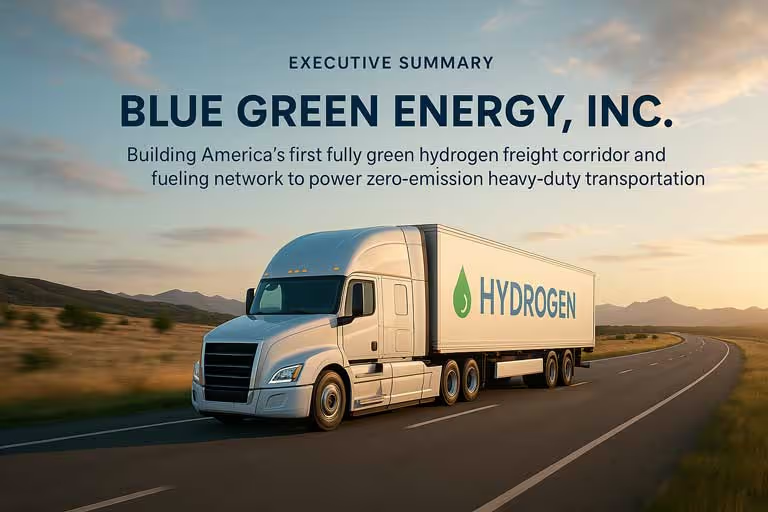
Whether we agree with decarbonization or not, nearly 85% of the developed world already has or has announced Net Zero initiatives. Heavy industry, transportation and agriculture are the sectors facing the most intense regulatory pressure to reduce carbon emissions.
Governments worldwide have established strict, legally binding deadlines to phase out fossil fuels across all modes of transport. The trucking industry is driven by strict fleet emission standards and upcoming internal combustion engine (ICE) bans, forcing a massive industrial shift toward medium and heavy-duty electric vehicles.
Unbeknownst to most people, there are two electric vehicle technologies: battery electric and fuel cell electric. Battery electric stores electric energy in a series of connected batteries and is used to drive electric motors. Most people are familiar with this technology. The lesser-known electric vehicle technology is fuel cell electric. These vehicles use a fuel cell, which operates on hydrogen gas to generate electricity. The electricity is still stored in a battery bank, but because the electricity is being generated as the vehicle runs, the batteries are smaller and tied directly to the electric motors. The benefit is instant power.
The electrification of heavy transport poses several problems not present in passenger vehicles, namely recharge time, payload capacity, and range. Comparing the two competing technologies side by side, the fuel cell electric truck is the clear winner when it comes to long haul. Modern trucks have a 600+ mile range, no reduction in payload capacity, and 12-15 minute refuel times.
An Established Industry With Growing Transportation Momentum
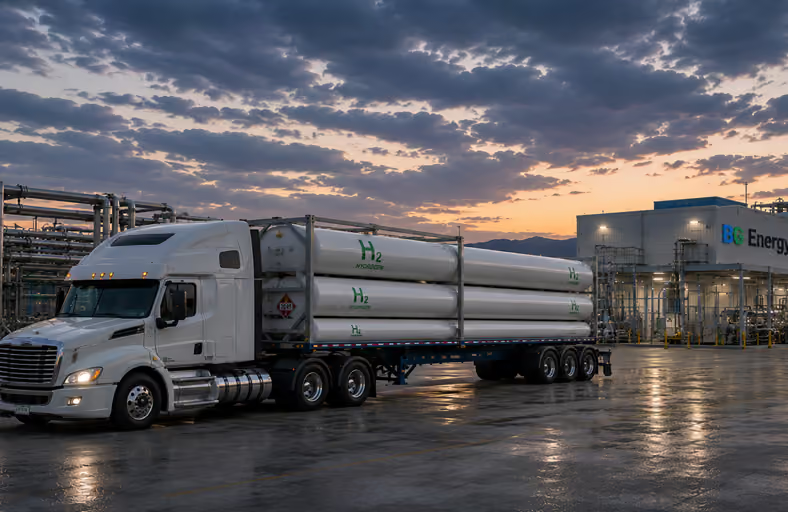
Hydrogen-powered trucks are not a futuristic technology. Mack and Kenworth have been operating hydrogen-powered trucks out of the Port of Long Beach, CA for the last decade. Volvo, Daimler, Hyzon, Hyundai — they all operate and sell hydrogen trucks. The problem is not the truck or the technology behind it. The fuel cell itself was developed in the early 1800s, decades before the gasoline engine.
The problem is that the infrastructure to support the transition has not advanced at the same rate as the introduction and sale of the trucks. In other words, if you don’t have the infrastructure to fuel the trucks along existing, established freight routes, then long haul is not possible.
It is also worth mentioning that producing hydrogen is a long-established industrial process. Hydrogen is a commercial gas. It is not complicated. The issue with the current state of hydrogen production is that 95% of hydrogen made in the United States is made from steam methane reforming. While natural gas is inexpensive and easy to access – for every 1 kg of hydrogen produced, the process emits 9–12 kg of CO₂. So while hydrogen itself is zero emission, the process of producing it is dirty.
This is why companies like Exxon are building hydrogen facilities that use carbon capture. This is why companies like Blue Green Energy are focused on extracting hydrogen from water.
The transition to net zero is not going to stop. Hydrogen trucks are the most viable option for fleets transitioning to electric trucks, but in order for that to scale the infrastructure to support it has to be built.
An Established Industry With Growing Transportation Momentum
Hydrogen-powered trucks are not a futuristic technology. Mack and Kenworth have been operating hydrogen-powered trucks out of the Port of Long Beach, CA for the last decade. Volvo, Daimler, Hyzon, Hyundai — they all operate and sell hydrogen trucks. The problem is not the truck or the technology behind it. The fuel cell itself was developed in the early 1800s, decades before the gasoline engine.
The problem is that the infrastructure to support the transition has not advanced at the same rate as the introduction and sale of the trucks. In other words, if you don’t have the infrastructure to fuel the trucks along existing, established freight routes, then long haul is not possible.
It is also worth mentioning that producing hydrogen is a long-established industrial process. Hydrogen is a commercial gas. It is not complicated. The issue with the current state of hydrogen production is that 95% of hydrogen made in the United States is made from steam methane reforming. While natural gas is inexpensive and easy to access – for every 1 kg of hydrogen produced, the process emits 9–12 kg of CO₂. So while hydrogen itself is zero emission, the process of producing it is dirty.
This is why companies like Exxon are building hydrogen facilities that use carbon capture. This is why companies like Blue Green Energy are focused on extracting hydrogen from water.
The transition to net zero is not going to stop. Hydrogen trucks are the most viable option for fleets transitioning to electric trucks, but in order for that to scale the infrastructure to support it has to be built.
Problems We Address
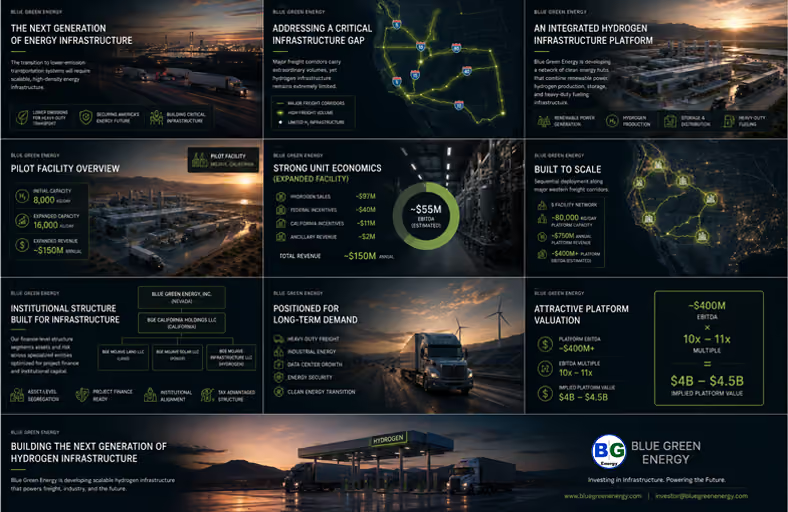
Hydrogen production exists at scale, but hydrogen production was never established as a fuel for cars and trucks. Existing suppliers produce and sell hydrogen to industrial customers by the metric ton. Most hydrogen is used in petroleum refining, ammonia and fertilizer production, steel manufacturing, and food processing. Production was established to supply large quantities of hydrogen to a single user. So while hydrogen production is a multibillion-dollar business:
So the problem isn’t only a lack of retail locations. It’s also a lack of dedicated hydrogen production and a lack of a distribution network.
This is why Blue Green Energy is developing vertically integrated facilities to produce and retail hydrogen where it is consumed.
Problems We Address
Hydrogen production exists at scale, but hydrogen production was never established as a fuel for cars and trucks. Existing suppliers produce and sell hydrogen to industrial customers by the metric ton. Most hydrogen is used in petroleum refining, ammonia and fertilizer production, steel manufacturing, and food processing. Production was established to supply large quantities of hydrogen to a single user. So while hydrogen production is a multibillion-dollar business:
So the problem isn’t only a lack of retail locations. It’s also a lack of dedicated hydrogen production and a lack of a distribution network.
This is why Blue Green Energy is developing vertically integrated facilities to produce and retail hydrogen where it is consumed.
Mojave Project
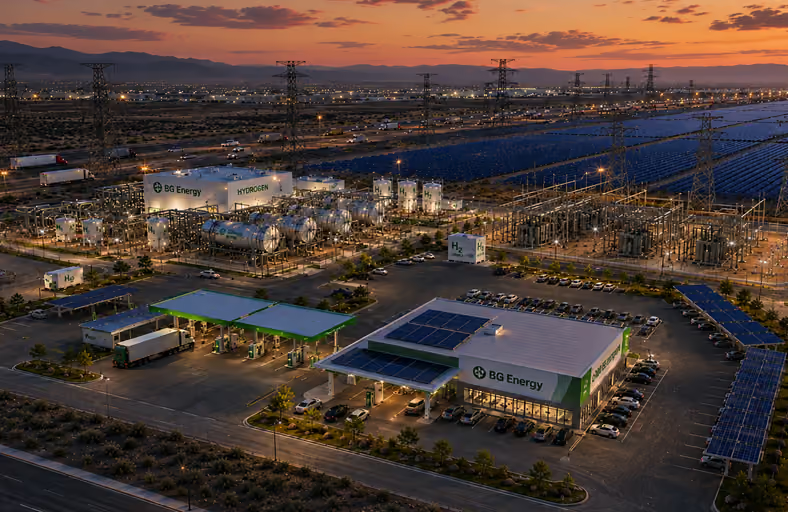
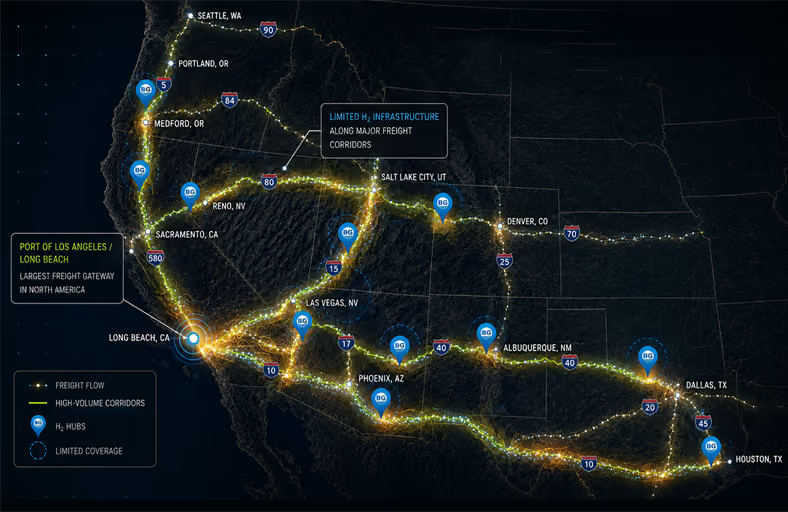
Phase I of Blue Green Energy's development plan consists of five interconnected hydrogen production and fueling facilities strategically located along major commercial freight corridors in the Western United States, beginning with our pilot facility, code-named the Mojave Project.
Our first location is planned along Interstate 15 in California's Mojave Desert, between the ports of Los Angeles and Long Beach and Las Vegas, Nevada. This is a major commercial freight artery connecting Southern California's ports, warehouses, and distribution centers with Las Vegas and the interstate highway network serving the rest of the country. If you have a hydrogen truck, you need us. If you have a hydrogen car, you need us.
If you have a battery electric semi, again you need us. If you have a battery electric vehicle, you have a lot of choices as most gas stations have electric vehicle charging. However, some of these locations are crowded, expensive, and have limited amenities. Given the world-class nature of our intended facility, we expect that if given a choice, most owners would prefer to stop at our location.
We produce “green” hydrogen onsite using solar power to run electrolyzers, which are the machines that separate hydrogen and oxygen molecules. We store hydrogen onsite and forego all transportation expenses. We produce the hydrogen where it is consumed. By incurring no transportation expense and by avoiding selling wholesale, we capture significantly more margin. We produce and retail hydrogen onsite. We fill hydrogen cars and trucks, we charge battery electric cars and trucks and we offer travel center amenities to the nearly 40,000 cars and 10,000 trucks passing by every day, whether they have an EV or not.
“Mojave” is the pilot facility that proves the model. The goal is to take the company public to raise additional capital to complete facilities 2–5. Each facility follows the same blueprint. The difference between one facility and five is capital. The difference between five and 100 is capital.
Each facility is purposely designed to be scalable, and our intention is to build them every 250 – 300 miles along the interstate.
Mojave Project
Phase I of Blue Green Energy's development plan consists of five interconnected hydrogen production and fueling facilities strategically located along major commercial freight corridors in the Western United States, beginning with our pilot facility, code-named the Mojave Project.
Our first location is planned along Interstate 15 in California's Mojave Desert, between the ports of Los Angeles and Long Beach and Las Vegas, Nevada. This is a major commercial freight artery connecting Southern California's ports, warehouses, and distribution centers with Las Vegas and the interstate highway network serving the rest of the country. If you have a hydrogen truck, you need us. If you have a hydrogen car, you need us.
If you have a battery electric semi, again you need us. If you have a battery electric vehicle, you have a lot of choices as most gas stations have electric vehicle charging. However, some of these locations are crowded, expensive, and have limited amenities. Given the world-class nature of our intended facility, we expect that if given a choice, most owners would prefer to stop at our location.
We produce “green” hydrogen onsite using solar power to run electrolyzers, which are the machines that separate hydrogen and oxygen molecules. We store hydrogen onsite and forego all transportation expenses. We produce the hydrogen where it is consumed. By incurring no transportation expense and by avoiding selling wholesale, we capture significantly more margin. We produce and retail hydrogen onsite. We fill hydrogen cars and trucks, we charge battery electric cars and trucks and we offer travel center amenities to the nearly 40,000 cars and 10,000 trucks passing by every day, whether they have an EV or not.
“Mojave” is the pilot facility that proves the model. The goal is to take the company public to raise additional capital to complete facilities 2–5. Each facility follows the same blueprint. The difference between one facility and five is capital. The difference between five and 100 is capital.
Each facility is purposely designed to be scalable, and our intention is to build them every 250 – 300 miles along the interstate.
Facility Economics
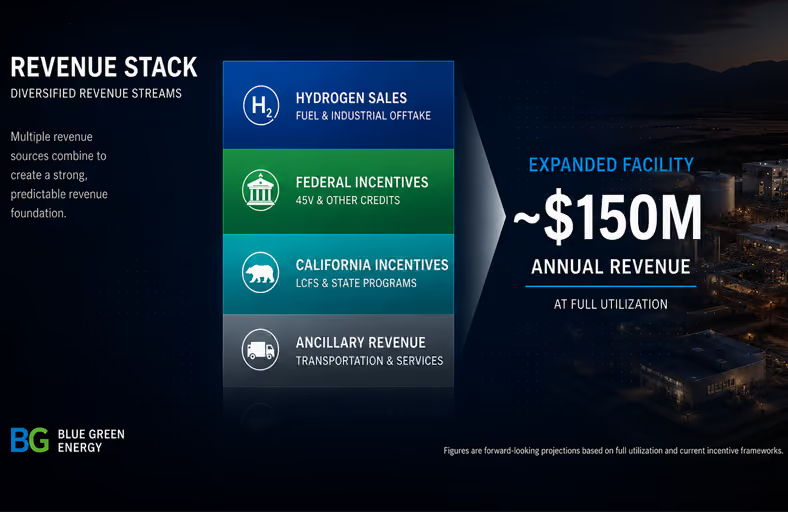
Blue At full production, each facility is projected to produce and retail 16,000 kilograms of hydrogen per day, supported by additional revenue from EV charging, travel center operations, and government incentives. Detailed pro forma financials including all assumptions are available in Appendices A–E of our Private Placement Memorandum, which is provided separately.
Facility Economics
Blue At full production, each facility is projected to produce and retail 16,000 kilograms of hydrogen per day, supported by additional revenue from EV charging, travel center operations, and government incentives. Detailed pro forma financials including all assumptions are available in Appendices A–E of our Private Placement Memorandum, which is provided separately.
The Current Investment Opportunity
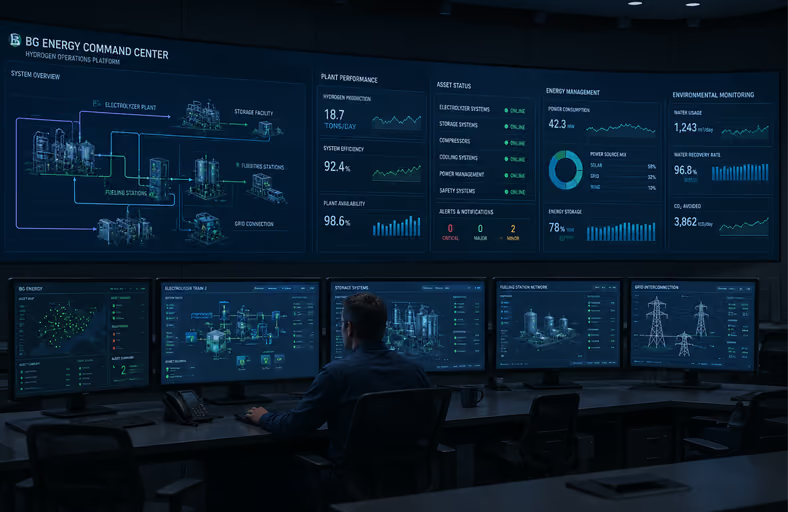
BGE is offering Series A Common Stock to accredited investors under Rule 506(c) of Regulation D. This raise is for continued advancement and development of the pilot facility. This stage is intended to advance the project through site control and environmental studies and to position the company for the next phase of financing. Construction costs are forecast at $143M, plus a 10% contingency of $14.3M. $2.5M does not build the facility.
The Current Investment Opportunity
BGE is offering Series A Common Stock to accredited investors under Rule 506(c) of Regulation D. This raise is for continued advancement and development of the pilot facility. This stage is intended to advance the project through site control and environmental studies and to position the company for the next phase of financing. Construction costs are forecast at $143M, plus a 10% contingency of $14.3M. $2.5M does not build the facility.
Finance Structure & Liquidity

Blue Green Energy is structured much like other large-scale energy infrastructure projects. Development follows a clearly defined path from early feasibility and site control through environmental studies, engineering, permitting, zoning, entitlements, and ultimately construction.
As we advance through each stage of development, we use milestone-based pricing. Key milestones include securing site control, completing environmental studies, obtaining the necessary permits and entitlements to make the project shovel-ready, and beginning construction.
Each milestone represents a measurable reduction in project risk. As the project advances and the risks associated with development are reduced, the company's valuation and share price are expected to increase accordingly. In simple terms, someone investing today is acquiring shares at an earlier stage and a lower valuation than someone investing after the project has completed these milestones.
As previously discussed, the current $2.5 million raise is intended to secure site control, advance environmental studies, and fund the initial development work. Completing this stage will allow us to better determine the remaining costs and requirements necessary to bring the site to shovel-ready status.
The detailed financing structure, offering terms, and financial assumptions are available in our Offering Circular and Private Placement Memorandum, provided separately to serious, qualified investors. The purpose of this Executive Summary is to give prospective investors an understanding of who we are, what we're building, how we intend to finance it, and the size of the opportunity.
Our plan is to finance the Mojave facility through a combination of equity, debt, special purpose vehicles (SPVs), grants, strategic partnerships, and fleet off-take agreements.
Once Mojave is operational, our intention is to pursue an initial public offering. We are targeting an IPO price of $25.00 per share, ten times the current offering price of $2.50.For early investors, an IPO could provide a liquidity opportunity.
For Blue Green Energy, its primary purpose is to raise the capital necessary to develop and construct the four additional facilities that complete Phase I.
Finance Structure & Liquidity
Blue Green Energy is structured much like other large-scale energy infrastructure projects. Development follows a clearly defined path from early feasibility and site control through environmental studies, engineering, permitting, zoning, entitlements, and ultimately construction.
As we advance through each stage of development, we use milestone-based pricing. Key milestones include securing site control, completing environmental studies, obtaining the necessary permits and entitlements to make the project shovel-ready, and beginning construction.
Each milestone represents a measurable reduction in project risk. As the project advances and the risks associated with development are reduced, the company's valuation and share price are expected to increase accordingly. In simple terms, someone investing today is acquiring shares at an earlier stage and a lower valuation than someone investing after the project has completed these milestones.
As previously discussed, the current $2.5 million raise is intended to secure site control, advance environmental studies, and fund the initial development work. Completing this stage will allow us to better determine the remaining costs and requirements necessary to bring the site to shovel-ready status.
The detailed financing structure, offering terms, and financial assumptions are available in our Offering Circular and Private Placement Memorandum, provided separately to serious, qualified investors. The purpose of this Executive Summary is to give prospective investors an understanding of who we are, what we're building, how we intend to finance it, and the size of the opportunity.
Our plan is to finance the Mojave facility through a combination of equity, debt, special purpose vehicles (SPVs), grants, strategic partnerships, and fleet off-take agreements.
Once Mojave is operational, our intention is to pursue an initial public offering. We are targeting an IPO price of $25.00 per share, ten times the current offering price of $2.50.For early investors, an IPO could provide a liquidity opportunity.
For Blue Green Energy, its primary purpose is to raise the capital necessary to develop and construct the four additional facilities that complete Phase I.
Development Roadmap

Development roadmap
Long Term Vision
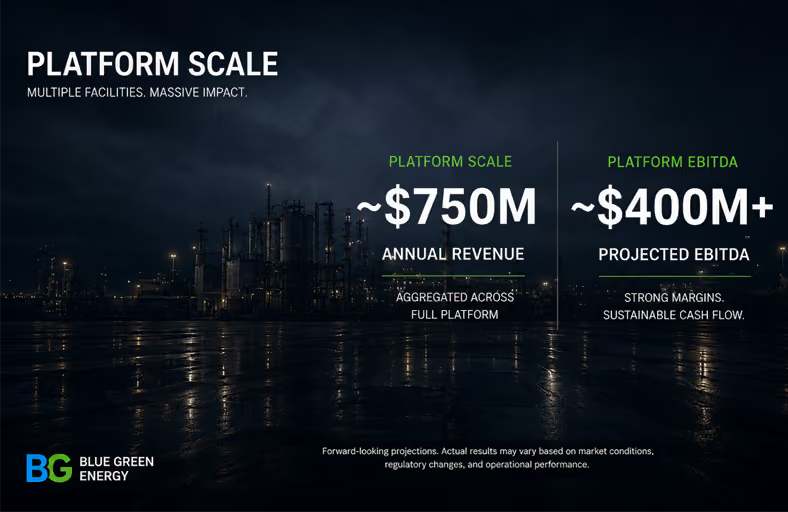
Our first five facilities combine hydrogen production, retail fueling, EV charging, and full-service travel centers to establish the foundation of a much larger hydrogen transportation network. Our long-term objective is to build facilities every 250–300 miles along the interstate highways connecting the country's major commercial freight corridors.
But building and operating our own facilities is only part of the opportunity.
Blue Green Energy is being developed to produce, retail, and eventually distribute hydrogen to other fueling locations as demand increases. We believe that as hydrogen-powered vehicles become more common, existing gas stations and truck stops will begin adding hydrogen pumps alongside their gasoline, diesel, and electric charging operations.
Today, hydrogen demand for transportation is fragmented and regional. That is why we believe producing and retailing hydrogen at the same location makes the most economic sense. We eliminate transportation expenses, avoid selling wholesale, and capture the retail margin.
As the market matures and hydrogen demand increases, we expect the industry to evolve toward larger centralized production facilities supplying multiple retail locations. Our intention is to participate in that market as both a producer and distributor, while continuing to operate our own vertically integrated facilities.
We also intend to expand into new markets through partnerships with existing gas stations and truck stops, company-owned fueling locations, and eventually franchised operations.
The goal is not to build a single hydrogen station, or even five. The goal is to build a national energy company focused on the production, retail, and distribution of hydrogen fuel for cars and trucks.
Long Term Vision
Our first five facilities combine hydrogen production, retail fueling, EV charging, and full-service travel centers to establish the foundation of a much larger hydrogen transportation network. Our long-term objective is to build facilities every 250–300 miles along the interstate highways connecting the country's major commercial freight corridors.
But building and operating our own facilities is only part of the opportunity.
Blue Green Energy is being developed to produce, retail, and eventually distribute hydrogen to other fueling locations as demand increases. We believe that as hydrogen-powered vehicles become more common, existing gas stations and truck stops will begin adding hydrogen pumps alongside their gasoline, diesel, and electric charging operations.
Today, hydrogen demand for transportation is fragmented and regional. That is why we believe producing and retailing hydrogen at the same location makes the most economic sense. We eliminate transportation expenses, avoid selling wholesale, and capture the retail margin.
As the market matures and hydrogen demand increases, we expect the industry to evolve toward larger centralized production facilities supplying multiple retail locations. Our intention is to participate in that market as both a producer and distributor, while continuing to operate our own vertically integrated facilities.
We also intend to expand into new markets through partnerships with existing gas stations and truck stops, company-owned fueling locations, and eventually franchised operations.
The goal is not to build a single hydrogen station, or even five. The goal is to build a national energy company focused on the production, retail, and distribution of hydrogen fuel for cars and trucks.
Why Invest

Every major industrial and technological transition has one thing in common. Before mass adoption can occur, the infrastructure to support it has to be built.
The railroads opened the country to commerce and industrial expansion. The interstate highway system transformed transportation, freight distribution, and the way Americans live and travel. Cable and fiber-optic networks made modern telecommunications and the internet possible. None of these industries could have achieved mass adoption without the infrastructure to support them. And in each case, the infrastructure itself became an enormous business.
We believe the transition away from fossil fuels in transportation represents another one of these opportunities. The vehicles are being developed, the technology already exists, manufacturers are investing billions, and governments around the world have committed to reducing emissions. But none of that matters if the infrastructure isn't there to support it.
The transition is not going to stop. The infrastructure has to be built. And that is the opportunity Blue Green Energy is positioned to capture.
But there is another reason we believe this is a particularly compelling time to invest.Our current investors are providing the development capital necessary to secure and advance our first facility. However, they are not investing in a single hydrogen station. They are acquiring ownership in Blue Green Energy, the company we intend to grow into a national hydrogen production, distribution, and retail network.
You're investing in the development of one facility, but you're buying ownership in the company we intend to build around it.
Today, Blue Green Energy is offering a limited number of shares at $2.50 per share, our earliest and lowest planned offering price. As we advance the project through development, each successive round of financing is expected to take place at a higher valuation.Our planned pricing schedule is:
The difference between investing today and investing in a later round is not simply the price of the shares. It is the opportunity to acquire a larger ownership position in the company before the milestones that we believe will increase its valuation have been achieved.
At today's $2.50 price, a $50,000 investment purchases 20,000 shares. At our targeted IPO price of $25.00, those same shares would have a market value of $500,000, representing a tenfold increase if that target is achieved.
And the IPO is not the end of our business plan. It is intended to raise the capital necessary to expand from one facility to five, establishing the foundation for a much larger national hydrogen network.
The opportunity for today's investors is to participate at the earliest valuation, before the first facility is developed, before the company goes public, and before the national expansion begins.
We're not asking investors to finance the invention of hydrogen fuel cells or gamble on whether hydrogen can be produced commercially. Those questions were answered long ago.We're building the infrastructure that an emerging transportation industry needs in order to grow.
The transition is underway. The infrastructure is missing. Someone has to build it.
We intend to be one of the companies that does.
Why Invest
Every major industrial and technological transition has one thing in common. Before mass adoption can occur, the infrastructure to support it has to be built.
The railroads opened the country to commerce and industrial expansion. The interstate highway system transformed transportation, freight distribution, and the way Americans live and travel. Cable and fiber-optic networks made modern telecommunications and the internet possible. None of these industries could have achieved mass adoption without the infrastructure to support them. And in each case, the infrastructure itself became an enormous business.
We believe the transition away from fossil fuels in transportation represents another one of these opportunities. The vehicles are being developed, the technology already exists, manufacturers are investing billions, and governments around the world have committed to reducing emissions. But none of that matters if the infrastructure isn't there to support it.
The transition is not going to stop. The infrastructure has to be built. And that is the opportunity Blue Green Energy is positioned to capture.
But there is another reason we believe this is a particularly compelling time to invest.Our current investors are providing the development capital necessary to secure and advance our first facility. However, they are not investing in a single hydrogen station. They are acquiring ownership in Blue Green Energy, the company we intend to grow into a national hydrogen production, distribution, and retail network.
You're investing in the development of one facility, but you're buying ownership in the company we intend to build around it.
Today, Blue Green Energy is offering a limited number of shares at $2.50 per share, our earliest and lowest planned offering price. As we advance the project through development, each successive round of financing is expected to take place at a higher valuation.Our planned pricing schedule is:
The difference between investing today and investing in a later round is not simply the price of the shares. It is the opportunity to acquire a larger ownership position in the company before the milestones that we believe will increase its valuation have been achieved.
At today's $2.50 price, a $50,000 investment purchases 20,000 shares. At our targeted IPO price of $25.00, those same shares would have a market value of $500,000, representing a tenfold increase if that target is achieved.
And the IPO is not the end of our business plan. It is intended to raise the capital necessary to expand from one facility to five, establishing the foundation for a much larger national hydrogen network.
The opportunity for today's investors is to participate at the earliest valuation, before the first facility is developed, before the company goes public, and before the national expansion begins.
We're not asking investors to finance the invention of hydrogen fuel cells or gamble on whether hydrogen can be produced commercially. Those questions were answered long ago.We're building the infrastructure that an emerging transportation industry needs in order to grow.
The transition is underway. The infrastructure is missing. Someone has to build it.
We intend to be one of the companies that does.
Next Steps

This Executive Summary introduces the sector, the opportunity, and BGE’s plan. The accompanying Investment Overview is Part 2: a more detailed presentation of the five-facility development strategy, project economics, revenue model, financing requirements and growth plan. The Private Placement Memorandum provides the complete offering terms, financial assumptions, execution details and required disclosures for investment review.
Accredited investors interested in the opportunity are invited to continue with the Investment Overview and discuss the current offering with BGE.
Blue Green Energy, Inc.
www.investinbge.com
725-699-1017 Option 1
Next Steps
This Executive Summary introduces the sector, the opportunity, and BGE’s plan. The accompanying Investment Overview is Part 2: a more detailed presentation of the five-facility development strategy, project economics, revenue model, financing requirements and growth plan. The Private Placement Memorandum provides the complete offering terms, financial assumptions, execution details and required disclosures for investment review.
Accredited investors interested in the opportunity are invited to continue with the Investment Overview and discuss the current offering with BGE.
Blue Green Energy, Inc.
www.investinbge.com
725-699-1017 Option 1


Disclaimer:The information presented is not an offer to sell or a solicitation of an offer to sell any securities mentioned herein. Offers are made only by prospectus or other offering materials. To obtain further information, you must complete our investor questionnaire and meet the suitability standards required by law.
The information and opinions contained in this document have been compiled or arrived at in good faith from sources believed to be reliable; however Blue Green Energy, Inc. cannot be held responsible for its accuracy or completeness.
Thank You,
Management